Showing posts with label Tri-Nations. Show all posts

Thursday, November 23, 2006

Stacey Jones to Retire from International Rugby - No Really

Kiwi ace Stacey Jones goes into Saturday's Tri-Nations final with Australia for what will probably be the last time he will wear a New Zealand test jersey.


I'm not kidding, really!

OK, so he might have "retired" in 2004 and "retired" again after he announced he'd joined Les Catalans in 2005.

But now he's stated that Saturday's clash in Sydney will "probably be his last" game for New Zealand

Who am I to doubt that?

Monday, November 20, 2006

Another Year, Another Failure

For the second year in succession, Great Britain are the first side to bow out of the Gillette Tri-Nations after yet another year of failure on the International stage.


Saturday's 33-10 defeat in Brisbane highlighted how far ahead the Australians are and showed just how little the British game has actually progressed in comparison.

The debates raged long into the night at Suncorp Stadium as to why the Lions were once again shown to be toothless. Scheduling, injuries, travelling, team selection and basic abilities were raised as factors in the Brisbane and Wellington defeats but what reasons actually hold any water?

Problem 1: The Talent Pool.
Phil Clarke, the recently resigned Great Britain team manager raised a point in Sky Sports' after match analysis which I felt was extremely pertinent:
It's no good saying that "we tried hard". Twenty years ago, Brian Noble "tried hard" against Australia and lost. Today, Great Britain "tried hard" and lost again. That tells you that the problem is not one of effort, but one of ability.
You just have to look at the two squads to see where Clarke is coming from. The likes of Jamie Peacock, Paul Wellens and Gareth Ellis could make a strong claim to be amongst the best players in the world but once you look past that, you start to see where the differences apply.
Once Sean Long departed the Great Britain set-up, not only did he leave the side without a recognised goal-kicker, but he also left the side without an experienced half-back. Both Richard Horne and Rob Burrow, as talented as they undoubtedly are, are not battle-hardened on the International stage. Asking an untested partnership in McGuire and Horne to go into a must-win game against the combination of Thurston and Lockyer is the personification of Rugby League suicide.

The talent pool in Britain is light years behind the NRL set-up. You could take any one player from that Australian side and come up with a raft of players suitable to fill the void.
In the full-back position for instance, aside from Paul Wellens, there was only the injured Richard Mathers who could make a realistic claim for a test jersey. The Australians on the other hand, have Karmichael Hunt, Billy Slater, Anthony Minichello and, if push comes to shove, Darren Lockyer.
It's the same story at scrum half. North Queensland's Jonathon Thurston became the Kangaroo's natural successor to Andrew Johns but even if he had he failed to make the grade, the likes of Matt Orford, Brett Finch, Brett Kimmorley or Scott Prince would no doubt have been able to fill the void.

Part of that problem has been fuelled by Brian Noble's decisions to persist with the tried and failed players instead of blooding young, upcoming players in warm-up and exhibition games but the problems also lie at home. The pressures imposed by the threat of automatic relegation coupled clubs' insistence on importing overseas talent prevents the talent pool from growing and forces players from the Super League academies into the National Leagues, where they then lose the benefit of full-time coaching.
This brings me onto the next point;

Problem 2: Maros Kolpak
Never again will a Slovakian handball player from the German second division have such an impact on British sport.
The 'Kolpak ruling' in 2003 opened the floodgates for players from Tonga, Samoa, Papua New Guinea, Fiji and South Africa (amongst other nations) to ply their trade in Super League without being subject to the overseas quota.
Just as an EU resident is able to work freely in the EU, so now is a member of a state which has a trading agreement with the EU.
Whilst this has meant the Super League fans have been thrilled by the skills of David Solomona, the power of Lesley Vainikolo and the personality and flair of Maurie Fa'asavalu, the quality of the imports has at times left much to be desired.
The fear for fans and supporters of Great Britain is that the overseas player are driving talent away from the Super League. In the round 27 clash between Bradford and Wakefield, just 16 of the 36 players on show were available for the watching Brain Noble to select. Such statistics show just how slim the talent pool is and it soon becomes little surprise why injuries and player withdrawals spell disaster of a touring GB side.
Rugby League isn't the only sport that has suffered from this. The same rules apply in Rugby Union but that too is to the detriment of Rugby League. Already we see the RFU, struggling to maintain a competitive England side with what is currently has, "importing" British talent from the 13-man game. Andy Farrell may not have been such a loss given his age, but perhaps the same could not be said for Chev Walker and Karl Pryce.

Problem 3: Scheduling
For the past three years, whilst Australia and New Zealand get two week-long breaks, Great Britain are asked to play four times in four weeks (five times had the made the final).
In such a physical and intense competition, such a schedule is difficult enough on home soil. On tour however, the problems are multiplied. The GB players are typically used to one hour drives across the M62 for away games and are, at worst, asked to endure a 90 minute flight to the south of France. To then ask those players to travel to the other side of the globe and then take no less than six domestic flights between venues is putting undue pressure on already overworked players.
The situation worsens when you factor in the number of games the players are asked to play domestically.
Any St Helens player in the GB squad that was lucky enough to play every game for his club would have played in 28 Super League games (two of which were in France), Five Challenge Cup games, including the final and two play-off fixtures (although this could possibly have been four had they finished lower in the table). That amounts to 35 domestic games in total from a possible 37 (excluding friendlies). In addition, add four Tri Nations matches and a mid-season international to give you 40 games in just ten months. Such a season is far from workable in such a physically intense sport and if GB are have the opportunity to prepare for success and prevent such a difficult international itinerary from occurring again, the the RFL needs to ensure that the number of Super League fixtures are cut.

Problem 4: Team Selection
A stand-off on the wing, a second row in the front row, a complete liability at loose forward, one of our most creative players sat on the couch at home and Sean Long at scrum half.
This years Great Britain team selection, like every other year, has been a mismatch of players picked on reputation being played out of position just so that they can all be accommodated.
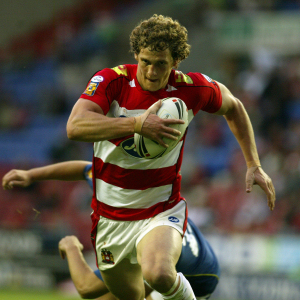
Some selections paid off in the sense that they were one of few positives to emerge. James Roby and Gareth Hock played superbly and certainly staked their claim to be Lions regulars in the future.
But there were plenty of negatives. Leon Pryce was taken away from the area of the field where he is dangerous. He is a competent winger, but his talents are wasted there. The selection of Martin Gleeson was questionable to begin with but then his recall in place of the inform Kirk Yeaman suggested that Brian Noble had lost the plot and his persistence handing Sean O'Loughlin the number thirteen shirt showed quite simply that Nobby was indeed nuts.
Elsewhere, Andy Coley must have been wondering what he'd done wrong, after seeing Stuart Fielden keep him out of the side and Rob Burrow will also be questioning if he'll ever don a GB shirt in a test arena.

For many years now, we're constantly being told that we are catching up to the Australians. Those at Red Hall have been quick to point to British performances against NRL clubs in a pre-season friendly as an indicator that we are starting to get the better of the Roo's.
The results speak for themselves though and the past three decades have proved that the Australians are better in every facet of the game. Their infrastructures are better, their talent pool is better, their club game is better and their organisation is better.
Changes need to be made, not just to GB but to the British game in it's entirety, otherwise the Kangaroo's will continue to be leaps and bounds ahead of some very poor competition.

Thursday, November 16, 2006

So Long, Farewell

After Sean Long landed back in Blighty on Tuesday and was quickly led away by a St Helens official, the British media were still pondering what actually happened as the Lions returned to their Sydney base after the defeat in Wellington.


As the official line of "personal problems" is still maintained by the GB management, a line supported by the need to be with his expecting wife, rumours of mid-air shenanigans on the flight from New Zealand still persist.

But in an interview with the Daily Telegraph, Long claimed that his decision to leave the Tri-Nations early had nothing to do with the alleged drinking or gambling incidents, but was due to him believing that he had "nothing left to offer" the Great Britain side.
The man-of-the-match in the victory over Australia in Sydney reverted back to his usual GB standard in the 34-4 thumping at the hands of the Kiwi's and now it seems that the 30 year old has had enough.

So for Long, it will remain just one Test standard performance in eight years of International rugby. After making his debut in the 1998 series against the Kiwi's, Long has been consistently floundered once he comes up against notable opposition. The pin-point kicking game, clinical passing and devastating support play that has made him a favourite at Knowsley Road suddenly go AWOL as soon as he steps out into the International arena.

It also emerges on BBC Radio Five tonight that Long has retired from "tour rugby", effectively ending his International career.

At least now, Great Britain can move forward. Talented individuals such as Hull's Richard Horne, given the Number 7 shirt for Saturday's must win clash in Brisbane and Rob Burrow of Leeds will be handed their chance whilst Salford's Luke Robinson and of course, Lee Briers will be waiting for their chance come 2007 and for the 2008 World Cup.

It is of course, a far from ideal end for Long's International career but like Keiron Cunningham who announced his International retirement before him, few will bemoan the loss of a Great Briton.

Monday, November 13, 2006

A Long Flight Home

After Great Britain's capitulation in Wellington, scrum half Sean Long has left the Tri-Nations squad and returned to Blighty.


Saturday's 34-4 defeat to New Zealand means that the Lions must now go to Brisbane and at the very least, avoid defeat. That would be a tough task, even with a full strength squad but it then emerged this morning that the architect of GB's win over the Kangaroos in Sydney is heading back this morning.

The official line that came out this morning was that Long had asked permission to return home for "personal reasons" but rumours have been abound since the revelation.

The theory which most fits the reason and the one most of us will accept, is that Long has returned to be with his pregnant partner but more sinister claims have emerged both from the press here and in Sydney.

One story being banded about claims that Long had flouted an alcohol ban on the GB team's Sydney bound flight from Wellington, gambling exploits have also been mentioned - something that earned him a three month ban in 2004 and there is also the claim that Long had become unsettled after reportedly meeting with Australia coach Ricky Stuart over a possible move to Cronulla Sharks.

The Sydney Morning Herald has also put forward the notion of unrest in the GB camp surrounding the hooking role. The SMH has put forward that Long, amongst other players in the camp are unhappy at coach Brian Noble's insistence on starting Terry Newton at hooker, rather than Long's Saints team-mate James Roby.

Whilst I would suspect that the various theories are the result of the press looking for a story that isn't there, I suspect that we haven't heard the last of this. The SMH's "unrest in GB camp" story is the perfect paper seller and look out for plenty of follow-ups to that one leading up to the Brisbane clash.

Wednesday, November 08, 2006

GB Unchanged for NZ Clash

Great Britain coach Brian Noble has stuck with the same 17 that saw off Australia in Sydney for Saturday's decisive clash with New Zealand in Wellington.


After the 'grannygate' affair which saw the Kiwi's docked two points for fielding an ineligible player, a draw or better will see the Lions qualify for the final against the Roos in Sydney. New Zealand on the other hand, have to win and then hope that Great Britain lose to Australia in Brisbane if they are to sneak through to the Sydney showdown on points difference.

The saying often goes that you don't change a winning side, but concerns must surround Brian Carney. The Irish winger left the field on Saturday due to a suspected hamstring injury - problem that has plauged much of his career.
If Carney is fit there can be no complaints, but questions need to be asked as to why the current Great Britain squad only has two recognised wingmen amongst it's ranks. Leon Pryce has played wing before and Lee Gilmour performed well in that role in Sydney but one must still question the why the likes of Mark Calderwood or Stuart Reardon haven't made the trip.

Time will tell. I assume that Carney is fit but I'd expect the Kiwi's to be making numerous moves towards the GB No2.

Saturday, November 04, 2006

Let's all Laugh at Willie Mason.

Ha Ha Ha!

So Aussie big gob Willie proved to the Rugby League world that he's all mouth and little action.


Not content with mouthing off in the press all week, disparraging the haka trying to batter anything that wore a white shirt, he then went and cost the convicts the game against Great Britain, winding up the GB side and bombing the ball when presented with a gap wider than the Mersey tunnel.

The result, a 23-12 victory for the Lions, their first on Australian soil since 1992 and a RLIF disciplinary for Mason in the coming week.

Let's not get carried away mind. The odd Great Britain victory over the Roos isn't as rare as people might make out, it's just two consecutive wins that happen to be the problem.

That said, it's still bloody funny!

Monday, October 30, 2006

Damn Those Dirty Cheating Kiwis!

New Zealand haven't exactly come away from Saturday's 18-14 victory over Great Britain in a good light have they?


Not content with mucking up the time keeping, shaving about three minutes off the second half, it then it emerges that they may have fielded an inelegible player.
Apparently, Nathan Fein isn't quite sure whether he is from New Zealand or not. The result could be a two-point deduction from the Tri Nations table.

Lets make an example of these nit-wits! ;)

Thursday, October 26, 2006

Noble's Lucky Thirteen?

Great Britain coach Brian Noble named a familiar looking side to take on New Zealand in the Lions Tri-Nations opener in Christchurch.


The usual suspects are there in the starting thirteen although three new caps will be awarded from the interchange bench against the Kiwi's with James Roby, Gareth Hock, Gareth Carvell and James Wilkin all in contention for their first appearance in the Great Britain shirt.

But whilst the line-up was in many ways expected, that still hasn't prevented the arguments and the criticisms regardign selection from surfacing once again. Here, The One Pointer looks at the pro's and con's of Noble's selection.

Great Britain are expected to line up as follows on Saturday:
1. Paul Wellens (St Helens)
2. Brian Carney (Newcastle Knights)
3. Martin Gleeson (Warrington Wolves)
4. Keith Senior (Leeds Rhinos)
5. Leon Pryce (St Helens)
6. Danny McGuire (Leeds Rhinos)
7. Sean Long (St Helens)
8. Stuart Fielden (Wigan Warriors)
9. Terry Newton (Bradford Bulls)
10. Adrian Morley (Sydney Roosters)
11. Jamie Peacock (C) (Leeds Rhinos)
12. Gareth Ellis (Leeds Rhinos)
13. Sean O'Loughlin (Wigan Warriors)

SUBS
Four from:
Gareth Hock (Wigan)
Gareth Carvell (Hull)
James Roby (St Helens)
Lee Gilmour (St Helens)
Jon Wilkin (St Helens)
On paper, that looks a strong enough side, certainly enough to match and even better the Kiwi's, so where do the arguments come from?

1. The Three-Quarters and the Left Centre/Wing Combination
With regards to the backline for Great Britain, Paul Wellens and Brain Carney picked themselves. They are the best British players in their position by some distance.
The rest of the players in that back line should be breathing a sigh of relief. Martin Gleeson hasn't recaptured the form he showed in the 2004 Tri-Nations series, when he returned from his lenghty suspension and Leeds centre Keith Senior has also struggled for form. All the while, Kirk Yeaman and Hull has impressed in the Super League and many argue that he is the one who should start at three or four in Christchurch.
As for the left wing, Leon Pryce's selection has upset many, particuarly those in Wigan and on Humberside.
Pryce, who was represented St Helens as stand-off throughout the season, and who has made not secret of his dislike for the wing positon, has been selected over Hull winger Gareth Raynor and Wigan flyer Mark Calderwood, with the later of the two not even making the trip down under. Many believe that Raynor should take the place of Pryce and that Noble should once again refrain from playing players out of position.
However, I think Noble has got this selection right. A victory on Saturday put GB in the driving seat for a final birth, leaving NZ facing a much win game a fortnight later. With this in mind, Noble has gone for experience. Playing the experience combination of Senior and Pryce on the left is, in my view, a much wiser choice than selecting Yeaman and Raynor, a combination that at present, has just one cap between them.

2. At Sixes and Sevens
Here at The One Pointer, our disapproval of Sean Long's Great Britain performances are hardly a secret.
The selection of Long at scrum half came as no suprise, but what was suprising is the decision to send home GB's best half-back alternative, Lee Briers after the warm-up game in Newcastle.
When he comes up against the world's best, Long has fails to produce. His kicking game goes awol and his attacking ideas are too predictable for the quality of the Kangaroos and Kiwi's.
McGuire is a decision I can support but his game is reliant on players around him making breaks and finding space. Unless Long suddenly finds a way to unlock the solid defences he'll encounter over the coming weeks, that partnership will be wasted.

3. The Loose Forward
In the absence of Paul Sculthorpe and Kevin Sinfield, Sean O'Loughlin will don the number '13' shirt this weekend. The only question is "why?"
O'Loughlin has got to be one of the most over-rated players currenly in the Super League. He has failed to find form this season in a poor Wigan side, his attacking abilities are unspectacular and his tackling technique is non-existent. Add to that a proneness to conceeding soft penalties and you immediatley have a weak link which any half-decent International side will exploit.
Compare the attributes that the Wigan captain brings with the likes of the in-form Jon Wilkin or Paul Cooke and the decision to include O'Loughlin starts to look even more perplexing and it is just a shame that whilst Noble has named a very strong pack based on merit, the last name on his starting team sheet happens to be a player who is completely undeserving of that place.

All in all, the side selected is more than capable of matching New Zealand on paper. The pack is particuarly strong, the back line is experienced and despite a few questionable decisions, Noble appears to have put together a strong side. How strong that side proves to be will be discovered once GB kick-off against a battle-hardened New Zealand outfit.

Tuesday, October 24, 2006

Schtop! This GB Team, It is Not Ready Yet

Great Britain officially join the Gillette Tri-Nations this Saturday against New Zealand in Christchurch and the obligatory "this is the best squad I've worked with" has already been trotted out.


The Lions go into the game against the Kiwi's, an indeed the entire tournament, as massive underdogs. The Aussie media have them down as no-hopers and are fully expecting Brian Noble's side to be on the plane home as Kangaroo's kick-off the final against New Zealand.

The Kiwi's however are in desperate need of a victory to keep their chances alive. Two successive defeats against Australia have left them with zero points having played two games more than Great Britain. A third defeat would leave them facing an uphill battle to secure a berth in the Sydney showdown.

They needn't worry though, as Great Britain are fully deserving of their underdogs tag.
This isn't particularly a go at the players. On the whole, the Aussies are certainly stronger and the Kiwi's would claim to be more gifted in many areas, but the current GB squad are capable and indeed have beaten both sides in the past in one-off encounters.
The problem however is putting in consistent performances. A one-off win has always been achievable, it's the second and third win that has proved elusive in the past.

Much of the blame for that must lie with the Rugby Football League.

This year, as in previous years, Great Britain go into the tournament under prepared in comparison to their rivals. A warm-up game against a Newcastle District select does not get you battle-hardened for the toughest competition in sport.
Whilst the Kiwi's and Roo's have two International games under their belts, GB have a series of training sessions and Friday night pub match victory to their name.

It is this shoddy preparation that provided the basis for Phil Clarke's resignation from the post of Great Britain team manager and the lack of support from the RFL has not been fully addressed. A warm-up against a part time team and pre-season friendly against a New Zealand 'A' side is far from good enough. Instead, what is needed is for the RFL to shorten the Super League season.

Rid the year of the six 'additional' games, introduce a larger representative calendar and send Great Britain to the Tri-Nations earlier.
The Yorkshire v Lancashire concept was scrapped far too quickly. The powers at Red Hall were clearly expecting this to be an instant hit. By being sandwiched between two Super League rounds with a mid-week kick-off, this was never going to be the case. In the tried format, the clubs were never going to support it and neither were the fans. Instead, the concept should have been given it's own weekend.
As for Internationals, the Les Catalan franchise will eventually lead to the development of a competitive French side but until then, GB will have to make do with another non-event against New Zealand 'A' in 2007.

The opposers to the 'reduce six games' argument claim that clubs would struggle financially through a loss in match-day income. However, I would argue that clubs that are financially dependent on six 'artificially produced' fixtures should have their Super League credentials called into question.

I could call into question the selection policies and the tactics employed by Noble. I personally would prefer to see Lee Briers in the squad ahead of Long and Roby but the fact remains, Brian Noble is far more knowledgeable about the game than they vast majority of people on this planet. He knows what his sides strengths are and he knows their weaknesses.

The GB players aren't far behind their Southern Hemisphere counterparts. Unfortunately, the Rugby Football League isn't giving them the chance to prove that.

Monday, September 25, 2006

Great Britain Squad: Same Old, Same Old

Great Britain boss Brian Noble today selected his Great Britain squad for the forthcoming Tri-Nations tournament in Australia and New Zealand and, quite frankly, there are few suprises.


With one or two exceptions, Noble has once again gone with the players that have tried and failed miserably against the Roos in the past two tournaments as well as others who's incluson can only be described as baffling.
Ignored are the likes of Andy Coley, And Lynch, Malcolm Alker, Mark Calderwood, Lee Briers, and Paul Cooke, all of whom will have to wait for a call in the reserve squad whilst the 'tired' and tested Sean Long, Lee Gilmour, Lyon Pryce, Paul Johnson and Shaun O'Loughlin will once again get the chance to show how incapable they are of competing with the Australians.

Not only that but Noble has made calls of which I have yet to decide if they fall into the 'brave' or 'stupid' column.
Huddersfield winger Martin Aspinwall gets his call ahead of Wigan flyer Mark Calderwood and Salford's David Hodgson. St Helens hooker/half-back James Roby finds himself on the plane instead of either Micky Higham or, arguably Super League's most consistent hooker, Malcolm Alker and the fact that Gareth Hock has even been considered after spending what seems like forever on the sidelines with injury brings the selection into serious question.

Many have criticised Noble for not giving young players a chance at test level but perhaps what people haven't suggested is that those players need to be upto the task at hand.
The most disappointing omissions are those of Paul Cooke, although his November court case had probably already determined his availability, Bradford player-of-the-year Andy Lynch, arguably one of the seasons most inform forwards and Warrington's Lee Briers who will once again have to watch on whilst Sean Long inevitably fails to produce once again for the Lions.
All three of those players are deserving of a Great Britain cap and all have shown that they are amongst the best in their respective classes, yet for whatever reason they are being left at home along with the injured trio of Paul Sculthorpe, Kevin Sinfield and Jamie Langley.

There are bright spots however, Saints prop James Graham has been included and deservedly so after his performances for St Helens and for Great Britain in the mid-season test against New Zealand.

After two years of failure to break the Aussie's domination, Great Britain need a team capable of winning the Tri Nations. As wrong as I hope to be, this selection differs little from the squads of the past that have shown on several occasions that they are clearly not up to the task at hand. People within the camp will point to poor preparation as the reason for inept performances in the past but GB must learn to play with the cards they are dealt. They have shown they are capable of beating Australia on several occaisions in one-off encounters, now is the time to turn that ability into a consistent run of results. Noblle's omissions have shown that there is strength in depth but some selections also show that the GB set-up hasn't learnt from previous mistakes.